
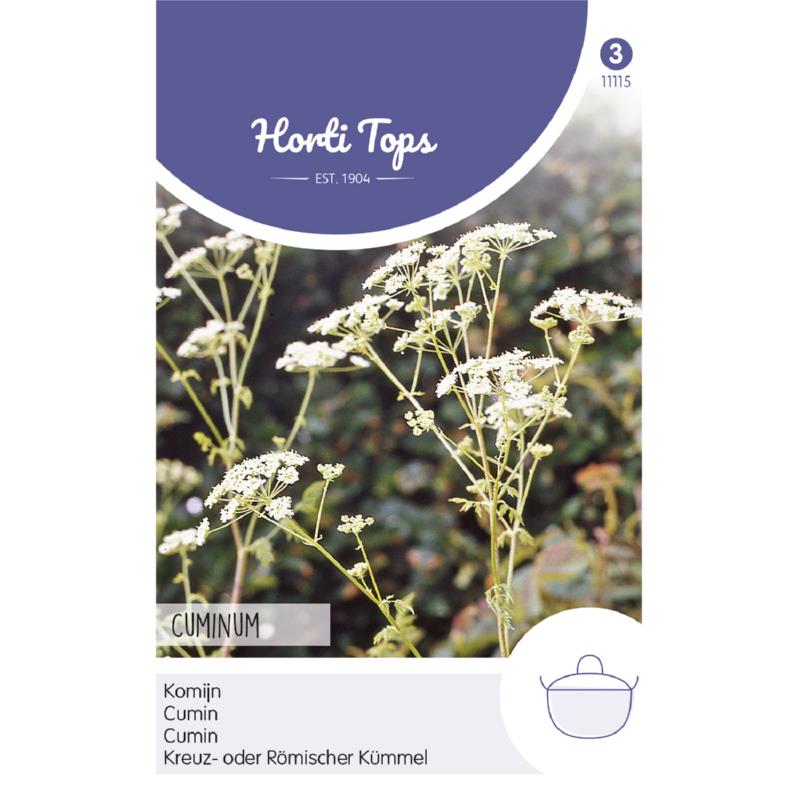
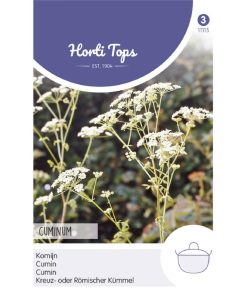
HT Cumin Seeds 2g – Cuminum cyminum Annual Culinary Herb
Cumin Seeds – Cuminum cyminum | Mallorn Ireland
Grow aromatic cumin from seed in Ireland. Cuminum cyminum produces warm, earthy seeds for curries, breads, rice dishes and homemade spice blends.
Code 11115
€2.59
In stock
Sowing Instructions
Cumin Seeds – Cuminum cyminum
Overview
Cumin, botanically known as Cuminum cyminum, is an aromatic annual herb cultivated for its distinctively warm, earthy seeds. Widely used in Indian, Middle Eastern, North African and Mediterranean cuisine, cumin brings a rich flavour to curries, soups, rice dishes, breads, roasted vegetables and spice blends.
The slender plants develop finely divided foliage followed by small white or pale pink flower umbels and aromatic seed heads. This is true cumin and should not be confused with caraway, which belongs to a different plant species and has a different flavour.
Key Features
- True cumin, botanically known as Cuminum cyminum
- Aromatic annual culinary herb
- Produces warm, earthy-flavoured seeds
- Essential ingredient in many international cuisines
- Excellent for curries, breads, rice dishes and spice blends
- Suitable for sunny herb gardens and vegetable plots
- Approximately 2 g of seed per packet
Sowing Instructions
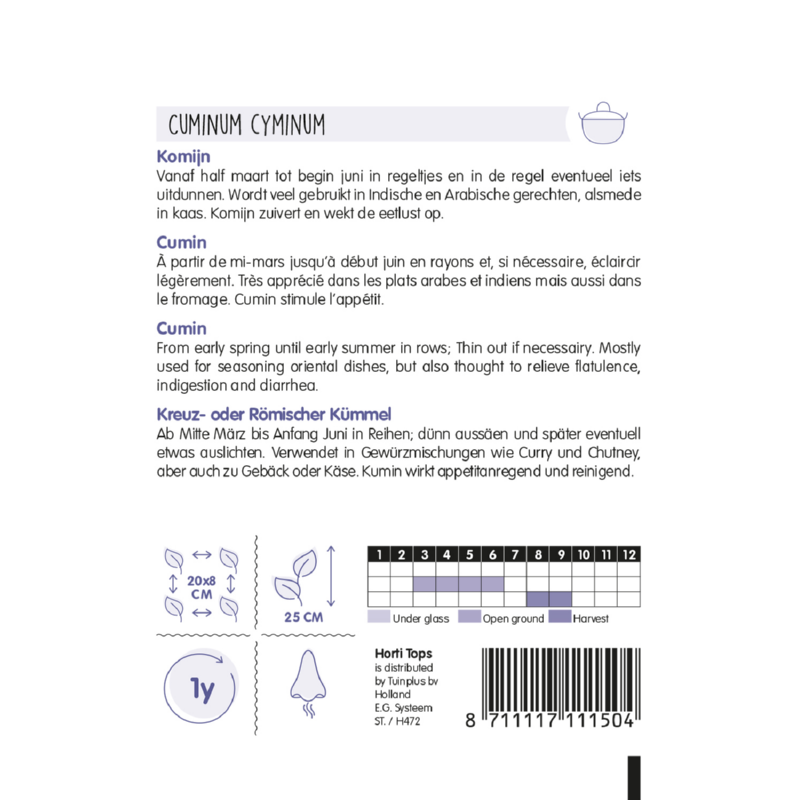
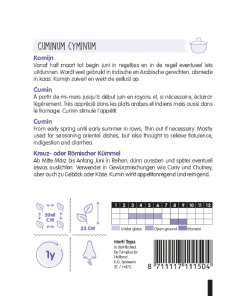
Sow directly outdoors from mid-March until early June in a warm, prepared seedbed. Sow the seeds thinly in shallow rows and cover lightly with fine soil. Keep the soil evenly moist during germination without allowing it to become waterlogged.
When the seedlings are established, thin them to approximately 15–20 cm apart. Cumin develops a taproot and generally performs best when sown in its final position rather than transplanted.
Growing Conditions and Care
Choose a warm, sunny and sheltered position with light, fertile and well-drained soil. As cumin requires a relatively long, warm growing season to ripen its seeds, the warmest available location is recommended when growing cumin in Ireland.
Keep young plants free from weeds and water during prolonged dry periods. Avoid excessive watering or heavy, waterlogged soil. Plants grown in exposed positions may benefit from light support.
Harvesting and Use
Cumin seeds are generally ready to harvest during August and September. Allow the flower heads to develop and cut them once the seed heads begin to dry and turn brown, before the seeds start to fall naturally.
Place the harvested stems upside down in a paper bag or spread them in a dry, well-ventilated location. Once completely dry, gently rub or shake the seed heads to release the cumin seeds. Store the cleaned seeds in an airtight container away from direct sunlight.
Use whole or ground cumin seeds in curries, stews, soups, rice dishes, breads, cheeses, roasted vegetables and homemade spice mixtures. Lightly toasting the dried seeds before grinding can help release their characteristic aroma.
Product Details
- Botanical name: Cuminum cyminum
- Common name: Cumin
- Plant type: Annual culinary herb
- Flower colour: White to pale pink
- Sowing period: Mid-March to early June
- Harvest period: August to September
- Plant spacing: Approximately 15–20 cm
- Position: Full sun
- Soil: Light, fertile and well-drained
- Packet contents: Approximately 2 g
- EAN: 8711117111504
Browse quality herb seeds from Mallorn Gardening Supplies for culinary gardens, vegetable plots and growing herbs from seed in Ireland.
 |  |  |  |
| Weight | 2 g |
|---|
Q & A
Related products
Reviews
There are no reviews yet